- Science Brew
- Posts
- ☕️ Ryugu asteroid sample rapidly colonized by life.
☕️ Ryugu asteroid sample rapidly colonized by life.
Colonized by terrestrial microorganisms.

Dylan Dance
November 28, 2024
Good morning.
You are braver than you believe, stronger than you seem, and smarter than you think.

GIPHY
—Dylan J. Dance
SCIENCE

Meteoritics & Planetary Science
🌌 Ryugu asteroid sample rapidly colonized by terrestrial life despite strict contamination control. A recent study shows that the sample from asteroid Ryugu, despite being handled under strict contamination protocols, was quickly colonized by terrestrial microorganisms. This result demonstrates just how pervasive Earth life is, even in controlled environments designed to prevent such occurrences. "No niche is left unoccupied," noted researchers, highlighting the tenacity of microbial life.
🫁 New Treatment for Asthma Could Last Up to Five Years - First new treatment for asthma attacks in 50 years. An exciting new treatment for asthma could significantly improve outcomes for those living with the condition, lasting up to five years. Researchers have developed an innovative biologic drug that targets the underlying inflammation in asthmatic lungs, offering a potential long-term solution that reduces the frequency of symptoms and the need for daily inhalers.
🧬 PFAS and microplastics become more toxic when combined, research shows. New research reveals that when PFAS and microplastics are combined, their toxic effects amplify, creating a "synergistic effect" that exacerbates the dangers. Researchers found that water fleas exposed to both substances suffered severe health impacts, including developmental delays and reduced birth rates. The findings stress the need to understand chemical mixtures since humans are frequently exposed to multiple toxins simultaneously.
🔬 Newly designed nanocrystals can kill bacteria under visible light. Researchers have found that nanocrystals could make previously invisible bacteria visible under microscopes, paving the way for better microbial studies. By manipulating light properties, scientists are enabling the observation of structures with high precision, which was previously impossible. This breakthrough promises advancements in medicine and biotechnology, where detailed bacterial visualization is crucial.
💻 Scientists Crack Quantum Computing Complexity with Revolutionary Hybrid Design. Scientists have developed a hybrid quantum computing approach that reduces the need for extensive quantum gates, simplifying algorithm execution while improving resistance to errors and noise. By integrating natural system interactions, this method enhances the efficiency of quantum algorithms, making them more practical for real-world applications like data searching and error management.
TECH
🤖 Former Google CEO Alarmed by Teen Boys Falling in Love With AI Girlfriends. Eric Schmidt, the former CEO of Google, has expressed concern over young people becoming obsessed with AI girlfriends. He warned that young boys are particularly vulnerable to the allure of these "perfect" AI partners, which can lead to a detachment from reality. "It’s likely to take some kind of calamity to cause a change in regulation," Schmidt said, highlighting the dangers without sufficient oversight and regulation.
📚 Writers condemn startup's plans to publish 8,000 books next year using AI. A startup named Spines is drawing criticism for its plan to use AI to publish 8,000 books in the next year. Writers argue that Spines, which charges authors up to $5,000 for its AI-driven services, is more interested in profit than quality. "These aren't people who care about books or reading," said author Suyi Davies Okungbowa, criticizing the potential loss of craftsmanship and human care in book publishing.
🔍 Russia-linked hackers exploited Firefox and Windows bugs in 'widespread' hacking campaign. A Russian hacking group, RomCom, has used previously unknown Firefox and Windows vulnerabilities in a widespread hacking campaign, targeting devices across Europe and North America. Researchers from ESET confirmed that these "zero-day" exploits were used for a zero-click malware attack that allowed remote access to victim computers without any user interaction.
🎮 How Insects React to Virtual Reality Gaming. Scientists from Flinders University have developed virtual reality environments for insects to understand their behavior better. By using machine learning, they observed how insects interact with virtual objects, providing insights that could enhance technologies such as agricultural robots and aviation systems. “We look forward to using VR to investigate decision-making mechanisms in insects,” says Professor Nordström, one of the study's co-authors.
HEALTH
💉 Revolutionary Antibody 3E1 Offers Long-Lasting Pain Relief Without Side Effects. A new antibody, 3E1, offers long-lasting pain relief without the severe side effects associated with traditional painkillers. Targeting the CADM1 protein on sensory nerves, this antibody could potentially transform pain management, particularly for chronic pain patients who have struggled with other medications. Its effectiveness and specificity make it a promising candidate for future treatments without the risk of motor paralysis or toxicity.
🧠 Brains Grew Faster as Humans Evolved to Become More Social and Cooperative. A new study reveals that human brains grew rapidly as our ancestors evolved to be more social and cooperative. Researchers from the University of Reading found that brain size increased gradually, overturning previous theories that suggested dramatic leaps between species. This evolution was likened to a series of software updates, rather than sudden hardware upgrades. "This study completely changes our understanding of how the human brain evolved," said Professor Chris Venditti.
🧬 Team Discovers a Key Mechanism in Fat Cells that Protects Against Energetic Excess. Scientists have discovered a crucial mechanism in fat cells that enables them to safely store excess energy, preventing cellular rupture. This mechanism involves caveolae—tiny structures that physically protect the cell by flattening under stress, providing a "reservoir" of membrane. When these structures malfunction, cells become more rigid and less efficient at storing energy, which could contribute to metabolic diseases. "These results give us a better understanding of how adipose tissue responds to mechanical forces," explained Dr. del Pozo Barriuso from CNIC.
SPACE

NASA
🔭 Webb Observations Explore the Westerlund 1 Star Cluster. An international team of astronomers has employed the James Webb Space Telescope (JWST) to observe a supermassive open cluster known as Westerlund 1. Located about 13,800 light-years away, Westerlund 1 is the most massive known stellar cluster in the Milky Way. Observations from JWST revealed a diffuse nebulosity surrounding the cluster core, providing insights into its structure and evolution. The research aims to study cluster members and their interaction with the environment, revealing new details about massive star formation.
🌌 Biggest Galaxies in the Cosmos Grew Quickly Before Dying. Astronomers are closer to understanding how the largest galaxies in the cosmos grew so rapidly in the early universe. Research suggests these galaxies experienced intense star formation in their first billion years but then quickly "died"—stopping all star production. The ongoing investigation, using telescopes such as the James Webb Space Telescope, hopes to determine why these galaxies ceased to grow. "The small galaxies are supposed to form first. So why are these massive galaxies the first ones to form?" asked cosmologist Sune Toft, highlighting the mystery of their rapid growth.
🌠 Evidence Shows Alfvén Waves Generate Heat in the Magnetosphere. Astrophysicists from UCLA and the University of Texas have found evidence that Alfvén waves, caused by the solar wind interacting with Earth's magnetosphere, lead to heat generation. Using data from NASA's Magnetospheric Multiscale (MMS) mission, they observed that these waves speed up ion beams, which in turn create acoustic waves that generate heat. This discovery supports theories about how energy from the sun heats Earth's magnetic environment.
CLIMATE
🌲 Denmark to Plant 1 Billion Trees to Create New Forests. Denmark has announced a bold plan to plant 1 billion trees and convert 10% of its farmland into forests over the next two decades. The effort aims to reduce fertilizer usage and promote natural habitats, significantly altering the Danish landscape. "The Danish nature will change in a way we have not seen since the wetlands were drained in 1864," said Jeppe Bruus, head of Denmark’s Green Tripartite Ministry. The project will also include new taxes on greenhouse gases from livestock to address methane emissions.
🌊 Oceans Emit Sulfur, Cooling the Climate More Than Previously Thought. New research has quantified the global emissions of a sulfur gas produced by marine life, revealing that it cools the climate more than previously believed, particularly over the Southern Ocean. This discovery suggests that plankton emit methanethiol, which helps form clouds that reflect solar radiation, providing a cooling effect on par with that of major greenhouse gases. The study adds a previously overlooked component to climate models, enhancing the accuracy of predictions.
WORLD

NASA
🧊 NASA scanners detect hidden base under Arctic ice. NASA's radar revealed an abandoned military base from the Cold War, known as Camp Century, under the Greenland ice sheet. "We were looking for the bed of the ice and out pops Camp Century," said NASA cryospheric scientist Alex Gardner. The site, now buried under 100 feet of ice, was once used for testing missile launches.
🧠 Swiss 'AI Jesus' Project Bridges the Digital and Divine. An experimental art installation called "Deus in Machina" allowed visitors in Lucerne, Switzerland, to interact with an AI version of Jesus installed in a chapel confessional. The AI took questions about faith and offered responses based on scripture, sparking deep reflections among visitors. While the project raised ethical questions, it successfully demonstrated AI's growing role in human spirituality. "If 'AI Jesus' helps people connect deeper with their spirituality, it will lead to better individuals and a better world," said Kenneth Cukier, an expert on AI and faith.
🦎 Peru Scientists Unveil Crocodile Fossil Up to 12 Million Years Old. Paleontologists in Peru have unveiled a young marine crocodile fossil dating back 10 to 12 million years. The three-meter-long crocodile, discovered in the Ocucaje desert, is significant as it's the first juvenile of its species to be found, giving new insights into the development of these ancient reptiles. "They had an elongated snout and their diet was entirely piscivorous, feeding on fish," said lead paleontologist Mario Gamarra.
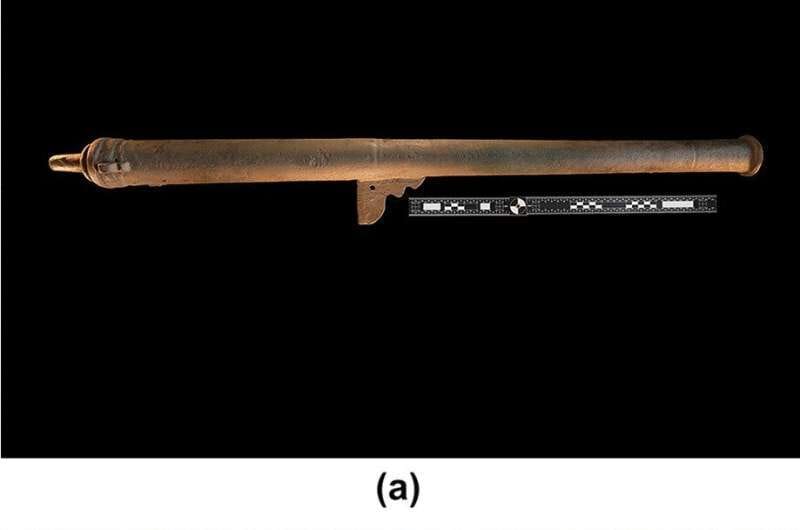
🔫 Oldest US firearm unearthed in Arizona, a bronze cannon linked to Coronado expedition. Archaeologists have unearthed a bronze cannon in Arizona that could be linked to the Vázquez de Coronado expedition, making it the oldest firearm ever found in the United States. Measuring 42 inches and weighing 40 pounds, the cannon dates back to the early 16th century and provides insights into early Spanish-Native American interactions. This artifact was discovered at a Coronado-era Spanish stone-and-adobe structure.
International Journal of Historical Archaeology
Reply