- Science Brew
- Posts
- ☕️ Earth May Have Had a Saturn-Like Ring.
☕️ Earth May Have Had a Saturn-Like Ring.
Over 400 Million Years Ago.

Dylan Dance
November 19, 2024
Good morning. Day 2 of the Dark Matter Particle Physics conference was fairly uneventful apart from some interesting talks and a walk to a lighthouse. The most notable talk was concerning how we might detect dark matter at the IceCube Neutrino Observatory in Antarctica if the Sun has captured some dark matter.
—Dylan J. Dance
SCIENCE
Oliver Hull
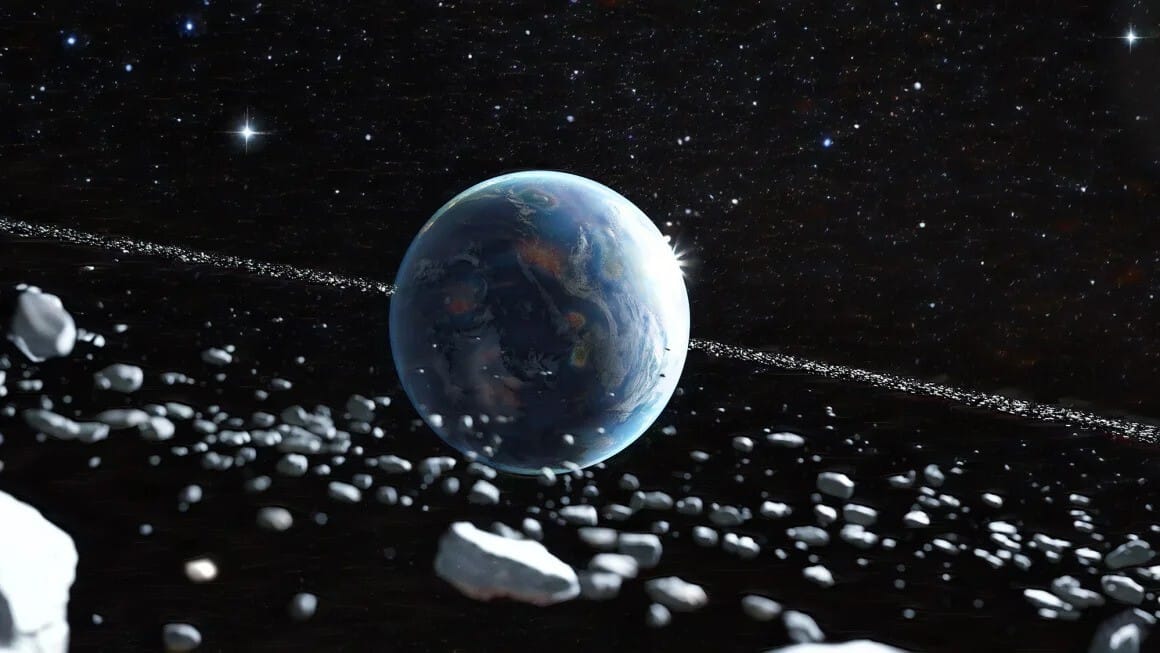
🪐 Earth May Have Had a Saturn-Like Ring Over 400 Million Years Ago. A recent study suggests that Earth may have had a Saturn-like ring formed by an asteroid that broke apart due to gravitational pull approximately 466 million years ago. This ancient ring might help explain some of Earth's climate anomalies, including a global deep freeze during the Ordovician period.
🔬 Breakthrough Fossil Sheds Light on the Dawn of Diverse Animal Life. Scientists have discovered Uncus dzaugisi, the oldest known ecdysozoan fossil, dating back to the Precambrian period. This tiny worm-like creature, found in South Australia, confirms predictions about the ancient origins of nematodes, arthropods, and other ecdysozoans, filling a significant gap in our understanding of the early evolution of this major animal group.
💡 Scientists Create Photonic Time Crystals That Amplify Light Exponentially. An international research team, led by Aalto University, has designed photonic time crystals that amplify light exponentially. These unique materials could revolutionize communication technologies, sensors, and lasers. Unlike regular crystals, which have spatial patterns, photonic time crystals oscillate periodically in time, offering novel ways to control light and making advanced optical technologies more compact and efficient.
☄️ The Comet Explosion That Shattered Climates and Caused Extinctions 12,800 Years Ago. New evidence suggests that a comet fragment entered Earth's atmosphere 12,800 years ago, triggering high-pressure airbursts that caused dramatic climatic shifts and extinctions. The study supports the Younger Dryas Impact hypothesis, pointing to the presence of impact proxies like platinum and shocked quartz found across the eastern U.S., which indicate a catastrophic event that halted the planet’s warming trend.
TECH
⚙️ China Activates World's Most Advanced Hypergravity Research Facility. China has activated the world's most advanced hypergravity facility, featuring three hypergravity centrifuges and 18 units, capable of reaching up to 1,900 times Earth's gravity. The facility aims to create extreme conditions that could help understand material behavior, potentially advancing fields like aerospace and materials science.
⚖️ OpenAI Faces Copyright Lawsuit Over Alleged Use of News Articles. OpenAI is facing a copyright lawsuit from AlterNet and The Raw Story, accusing the company of using their articles to train its AI models without permission. The plaintiffs claim this unauthorized use violates the Digital Millennium Copyright Act (DMCA), and if the case goes to trial, it could set significant legal precedents for AI training data.
💻 Seven-Year-Old Coder Gets Job Offer from Russian IT Firm. A seven-year-old coding prodigy named Sergey, who has been uploading videos explaining software coding since age five, has received a job offer from the Russian IT company Pro32. Although Sergey is too young to legally work, the firm sees potential collaboration and is excited about his future involvement in their corporate training programs.
HEALTH
🔬 Stanford’s New AI Tool Could Replace Costly Cancer Gene Tests. Researchers at Stanford have developed SEQUOIA, an AI tool that analyzes tumor biopsy images to predict gene expression. This technology could replace costly and time-consuming genetic sequencing, saving thousands of dollars in healthcare costs while speeding up cancer diagnosis and treatment decisions.
💩 According to Scientists, Taking This Supplement May Restart Stalled Menstruation. A new study from Ohio State University suggests that increasing ketone levels, through a keto diet or supplements, may help restart stalled menstruation or regulate irregular cycles. Eleven of thirteen participants who entered nutritional ketosis experienced changes in menstrual frequency or intensity, even after long-term absence. This indicates that ketones could play a role in hormonal regulation beyond just weight loss.
🦶 Sitting Too Long Can Harm Heart Health, Even for Active People. According to the American College of Cardiology, spending more than ten hours a day in sedentary behavior is linked with higher risks of heart failure and cardiovascular death, even among those who meet exercise guidelines. Dr. Shaan Khurshid, co-senior author, emphasizes that reducing sedentary time could be a key target for improving cardiovascular health.
SPACE
☀️ Solar Breakthrough: Scientists Redefine the Sun’s Elemental Blueprint. Scientists have discovered a new elemental composition for the Sun, revealing higher levels of carbon, nitrogen, and oxygen than previously thought. This discovery could reshape our understanding of the solar system's formation and has implications for calibrating models of other stars.
🔭 Theoretical Astrophysicist Proposes Solution to Enigma of Crab Nebula’s ‘Zebra’ Pattern. A researcher from the University of Kansas has provided a potential solution to the puzzling 'zebra' pattern seen in the Crab Nebula's emissions. Using wave optics models, Mikhail Medvedev suggests that the pattern is created by electromagnetic waves diffracting around a pulsar’s plasma. This insight could help us better understand the behavior of neutron stars and the dense plasma surrounding them.
🛰️ India Plans to Build a Moon-Orbiting Space Station by 2040. India has unveiled ambitious plans to build a moon-orbiting space station by 2040, marking a significant step towards a long-term presence beyond Earth. The lunar station will serve as a hub for scientific research and crewed missions, contributing to the global push for lunar exploration and sustainability.
WORLD

FScientific Reports (2024)
🐾 Saber-Toothed Kitten Preserved in Ice for 35,000 Years. The frozen remains of a saber-toothed kitten, estimated to be around 35,000 years old, were found encased in ice in the Republic of Sakha, Russia. The cub, belonging to the Homotherium species, displays adaptations for cold climates, including rounded front paws for better traction on snow.
💰 Bitfinex Hacker Sentenced to 5 Years for $10 Billion Bitcoin Heist. A hacker involved in the 2016 Bitfinex hack, which resulted in the theft of about $10 billion worth of bitcoin, has been sentenced to five years in prison. The sentencing brings closure to one of the largest heists in cryptocurrency history, highlighting ongoing challenges in regulating and securing digital assets.
🪖 Russia Vows 'Tangible' Response if US Missiles Used Against Its Territory
Russia has warned that the use of US long-range missiles by Ukraine will provoke a significant response. President Joe Biden approved the use of these missiles against targets inside Russia, marking a major shift in US policy. The decision has sparked international concern, as Russia claims it represents direct US involvement in the conflict, while French President Macron has called it a "totally good" step in Ukraine's defense.
🚀 SpaceX Rocket Launch Creates Stunning Light Display. A recent SpaceX rocket launch created a stunning light display in the sky over California. The Falcon 9 rocket carried 20 second-generation Starlink satellites, which aim to enhance global internet coverage. The light show was caused by the reflection of sunlight as the rocket ascended, fascinating onlookers.

BBC
Thanks for reading!
Reply